Black Music Shaping British Culture
Description
The Sound of Britain: How African and Caribbean Music Shaped British Culture
Discover the incredible story of Black British music history and how African and Caribbean communities helped shape the music we hear in Britain today!
As African and Caribbean families settled in the United Kingdom, they brought wonderful cultural traditions, including food, fashion, storytelling and music. Parents shared songs and musical styles from their home countries with their children, passing down their cultural heritage to new generations.
For many Black communities, music has always been more than entertainment. It has helped people celebrate special occasions, preserve traditions, express emotions, challenge injustice and bring communities together.
Over time, young British musicians began combining African and Caribbean rhythms with new musical influences, creating exciting genres such as lovers rock, jungle, UK garage and grime.
Our FREE Black British Music History Fact Sheet takes children on a journey through the people, events and musical styles that helped shape modern Britain.
Explore the History of Black British Music
Follow our colourful timeline and discover these important moments:
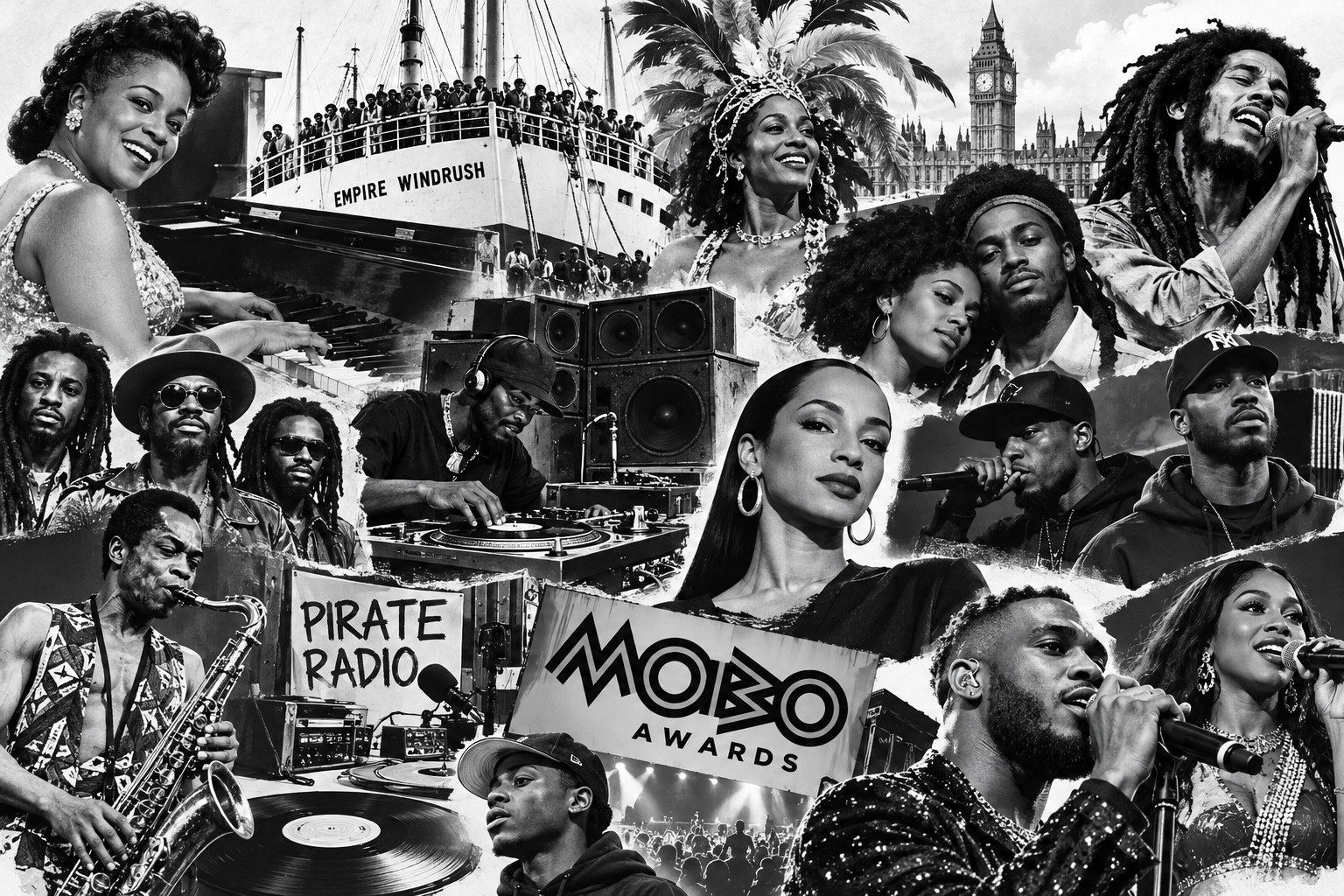
1945–1950s – Winifred Atwell Makes History
Trinidadian-born pianist Winifred Atwell became one of Britain’s most popular entertainers. In 1954, she became the first Black artist to reach No. 1 on the UK Singles Chart.
1948 – The Windrush Generation Arrives
Caribbean communities brought musical traditions, including calypso, to Britain, helping inspire future generations of musicians.
1959 – The Beginnings of Notting Hill Carnival
Claudia Jones organised an indoor Caribbean carnival celebrating music, dance and culture. The famous outdoor Notting Hill Carnival developed during the 1960s.
1960s–1970s – Reggae and Sound Systems
Jamaican sound systems brought reggae and ska to British communities. Music became a powerful way to celebrate identity and speak out against racism.
1970s – Lovers Rock Is Born
Lovers rock developed in Britain, combining reggae rhythms with romantic songs. Artists including Janet Kay and Carroll Thompson helped make it popular.
1970s–1980s – African Music Inspires Britain
African musical styles such as highlife, Afrobeat and soukous reached new audiences. Nigerian musician Fela Kuti helped popularise Afrobeat around the world.
1980 – Britain’s First Black-Owned Pirate Radio Station
DJ Lepke launched Dread Broadcasting Corporation (DBC), a pioneering Black-owned radio station playing reggae, soul, funk and calypso.
1980s – Black British Music Reaches New Audiences
Groups including Aswad and Steel Pulse helped popularise reggae, while Soul II Soul brought new combinations of soul, reggae and dance music to British audiences.
1985 – Sade Makes BRIT Awards History
British-Nigerian singer Sade and her band won Best British Album for Diamond Life, celebrating an important achievement in Black British music.
1990s – Jungle, Drum and Bass and UK Garage
British musicians combined reggae, dancehall, hip-hop and electronic music to create exciting new genres that became popular in clubs and on pirate radio.
1996 – The MOBO Awards Begin
Kanya King founded the MOBO Awards (Music of Black Origin), celebrating musical achievements across reggae, R&B, hip-hop and other genres.
2000s – Grime Takes Centre Stage
Grime emerged in East London. Artists including Wiley, Dizzee Rascal and later Stormzy helped introduce the genre to audiences across Britain and beyond.
2010s–Today – Afrobeats Goes Global
Contemporary West African music became increasingly popular worldwide. Artists including Wizkid and Burna Boy helped bring Afrobeats to international audiences.
The Heartbeat of Black Music
Have you ever wondered what makes music feel so exciting?
Many African and Caribbean musical traditions use special rhythmic patterns.
- Polyrhythms: Two or more different rhythms played at the same time, creating exciting overlapping beats.
- Syncopation: Placing emphasis on unexpected beats to create a lively, bouncy rhythm.
These musical techniques have influenced many of the genres we enjoy today.
What Will Children Learn?
Our FREE educational fact sheet introduces children to:
- Black British music history, from the 1940s to today.
- Influential musicians including Winifred Atwell, Sade and Fela Kuti.
- The cultural importance of the Windrush Generation and Notting Hill Carnival.
- How reggae, sound systems and pirate radio influenced British music.
- The development of lovers rock, jungle, UK garage, grime and Afrobeats.
- How music helps communities celebrate their heritage, share stories and challenge inequality.
Perfect for Parents, Teachers and Young Explorers
This educational resource is ideal for:
- Children aged 8–12 years.
- Black History Month activities.
- Primary school history and music lessons.
- Classroom discussions about culture, identity and diversity.
- Home education and independent learning.
Did You Know?
Many Black British musicians created their own radio stations, record labels and community events because mainstream music organisations did not always give them opportunities.
Their creativity and determination helped transform British music.
From calypso to grime, African and Caribbean music has helped shape the sound of modern Britain!
Download Your FREE Fact Sheet
Explore the history, people and musical traditions that helped shape Britain’s cultural identity.
Download your FREE Black British Music History Fact Sheet today and start your musical journey with My Iwe!
Every Child Deserves a Story. Every Child Deserves to Learn.
You must be logged in to post a review.
Reviews
There are no reviews yet.